
The Growing Importance of ISCC Certification in Global Supply Chains
5/14/20264 min read
Understanding ISCC Certification
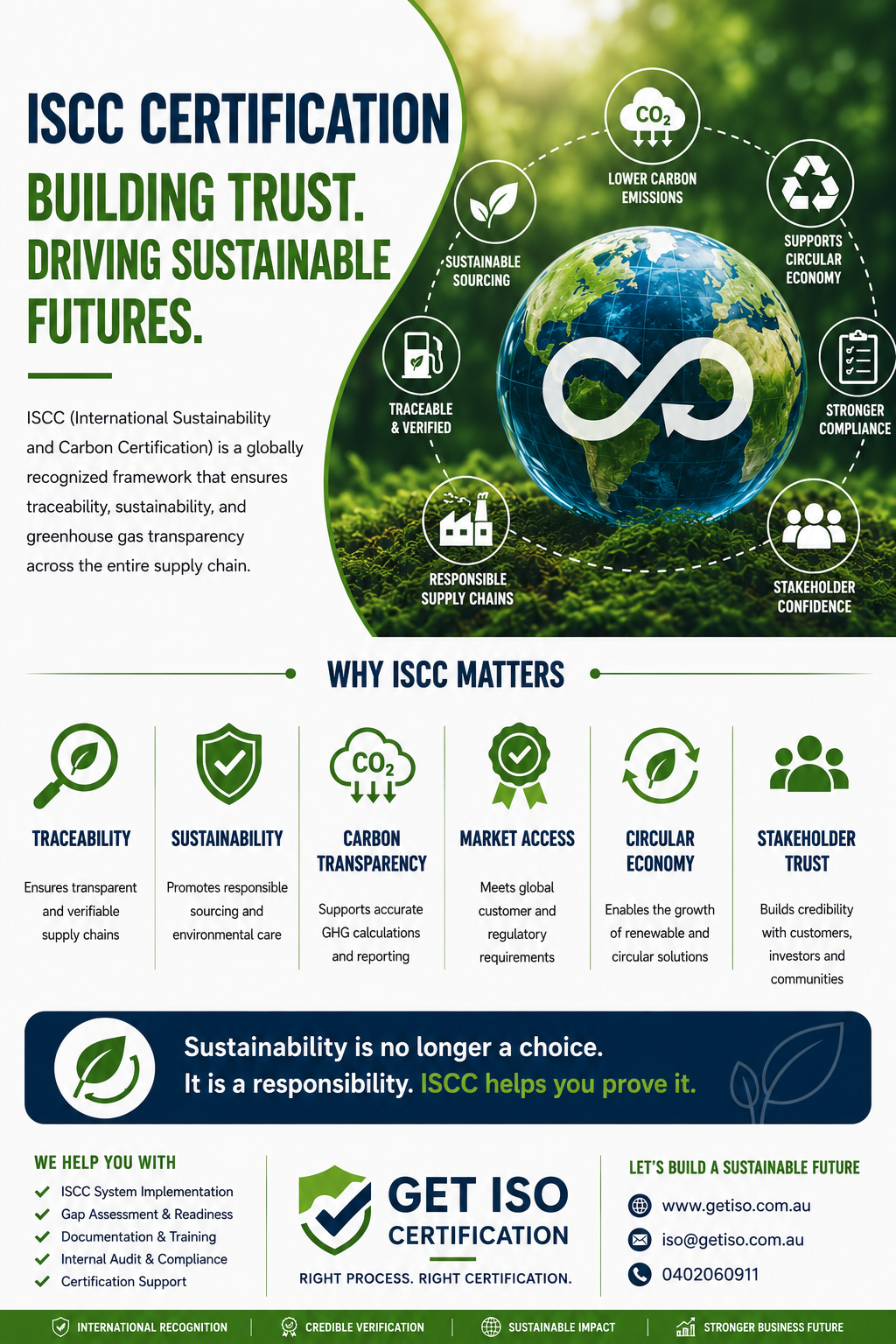
The International Sustainability and Carbon Certification (ISCC) represents a significant initiative aimed at promoting sustainable practices within global supply chains. ISCC certification was designed to enhance the sustainability of agricultural, forestry, and bio-energy practices while simultaneously reducing greenhouse gas emissions. The program provides a framework that businesses can adopt to demonstrate their commitment to sustainability, thereby increasing consumer trust and market competitiveness.
ISCC certification encompasses a comprehensive set of criteria that organizations must meet to qualify. These criteria include adherence to environmental regulations, social responsibility, and economic viability. Specifically, the certification focuses on several key aspects, such as promoting biodiversity, preventing deforestation, and implementing responsible land-use practices. By addressing these areas, ISCC helps ensure that certified operations contribute positively to the environment and local communities.
The certification process itself involves several stages, beginning with an initial assessment of the company's operations against ISCC standards. Organizations must provide documentation that demonstrates compliance with the established criteria. Following the assessment, an independent auditor conducts a thorough evaluation, leading to either approval or identification of areas for improvement. Benefit for businesses extends beyond compliance; certification can lead to operational efficiencies and enhanced market access, particularly in regions where sustainability is a prerequisite for market entry.
In today's competitive marketplace, achieving ISCC certification not only signifies a brand’s commitment to sustainability but also serves as a strategic advantage. It allows companies to not only meet regulatory requirements but also to align with consumer expectations for environmentally responsible practices. Thus, ISCC certification emerges as a vital component for businesses aiming to thrive in a progressively eco-conscious global economy.
Impact of Sustainability on Global Supply Chains
In recent years, there has been a significant shift in consumer expectations regarding sustainability. More individuals are choosing products that align with their environmental values, prompting companies to reassess their operations and supply chains. This change in consumer behavior is not just a trend; it has become a defining characteristic of the modern marketplace. Brands are leveraging sustainable practices not only to meet consumer demands but also to enhance their reputation and build loyalty.
One critical aspect of this shift is the connection between sustainability and investment. Investors are increasingly prioritizing companies that incorporate sustainable practices into their operations. This trend is evident in the rise of green investing, where fund managers prefer portfolios that reflect sustainable choices. By adopting sustainable practices, companies can attract capital from a growing pool of socially conscious investors, further integrating sustainability into the fabric of global supply chains.
The regulatory landscape is also evolving, with governments worldwide establishing stricter environmental regulations. Companies are now required to demonstrate compliance through transparent and sustainable supply chain practices. This necessity has led to the adoption of comprehensive certification systems, such as ISCC certification, which verifies that a company adheres to rigorous sustainability practices. Those that achieve ISCC certification can showcase their commitment to sustainability, bolstering their competitive position in the market.
Prominent corporations have successfully navigated these changes by integrating sustainable practices into their supply chains. For instance, brands like Unilever and Nike have embedded sustainability into their core strategies, resulting in not only reduced environmental footprints but also improved brand equity and customer satisfaction. These examples underscore the importance of adopting a sustainable supply chain as a viable business strategy, with ISCC certification serving as a vital tool in facilitating this transition.
The Role of ISCC Certification in Risk Management
In today's globalized economy, risk management is a critical component of effective supply chain operations. The ISCC (International Sustainability and Carbon Certification) certification has emerged as a significant tool for businesses to identify and mitigate risks associated with sustainability and potential supply chain failures. By obtaining ISCC certification, companies can align their operations with international regulations and standards, ensuring compliance that reduces the risk of penalties or disruptions due to legal issues.
Furthermore, the ISCC certification supports corporate social responsibility (CSR) commitments by promoting sustainable practices across the supply chain. It allows companies to demonstrate their dedication to environmental stewardship and ethical sourcing. This commitment not only enhances a company's reputation but also minimizes risks related to negative publicity or consumer boycotts, which can arise from unethical practices or environmental harm.
Traceability is another crucial aspect facilitated by ISCC certification. By ensuring that resources can be traced back through the supply chain, businesses can quickly identify potential vulnerabilities and address them effectively. This level of transparency not only helps to reduce risks associated with sourcing but also fosters trust and cooperation between suppliers and consumers. In an era where consumers are increasingly demanding sustainable and ethically sourced products, the ability to trace a product’s origin and the sustainability practices employed throughout its journey becomes vital.
Ultimately, ISCC certification enhances a company's ability to manage risks associated with sustainability effectively. This certification instills confidence among stakeholders, ensures compliance with evolving regulations, and reinforces relationships across the supply chain, thus paving the way for a more resilient and responsible business framework.
Future Trends and the Evolution of ISCC Certification
The growing importance of ISCC certification within global supply chains indicates a significant shift towards sustainability and traceability in sourcing practices. As businesses become increasingly aware of their environmental impact, the evolution of ISCC certification is expected to align with emerging trends, particularly in technology. Innovations in carbon footprint tracking, for instance, enable companies to measure and verify their greenhouse gas emissions more accurately. This technological advancement will facilitate the integration of real-time data into certification processes, improving transparency and trust for stakeholders.
Moreover, climate change continues to profoundly impact resource availability, which necessitates a reevaluation of sourcing strategies. As natural resources dwindle or become less accessible due to environmental changes, organizations may require ISCC certification not only to ensure responsible sourcing but also to uphold their reputation in a market that favors sustainability. The adaptation of ISCC certification to reflect these challenges will be crucial for companies aiming to maintain competitive advantages in their supply chains.
Consumer behavior is also shifting towards more responsible sourcing practices. Today's consumers are increasingly demanding transparency regarding the origins of the products they purchase, placing pressure on businesses to ensure their supply chains are certified and meet sustainability standards. The ISCC certification framework is poised to evolve to accommodate these demands, providing businesses with a structured approach to demonstrate compliance with environmentally conscious practices.
In conclusion, the future of ISCC certification will likely be characterized by technological advancements, heightened awareness of climate change impacts, and an evolving consumer landscape. Businesses that proactively adapt to these trends will not only enhance their supply chains' resilience but also align themselves with the goals of sustainable development.