
The Importance of Management Reviews: Leadership in Action
2/25/20262 min read
Understanding Management Reviews
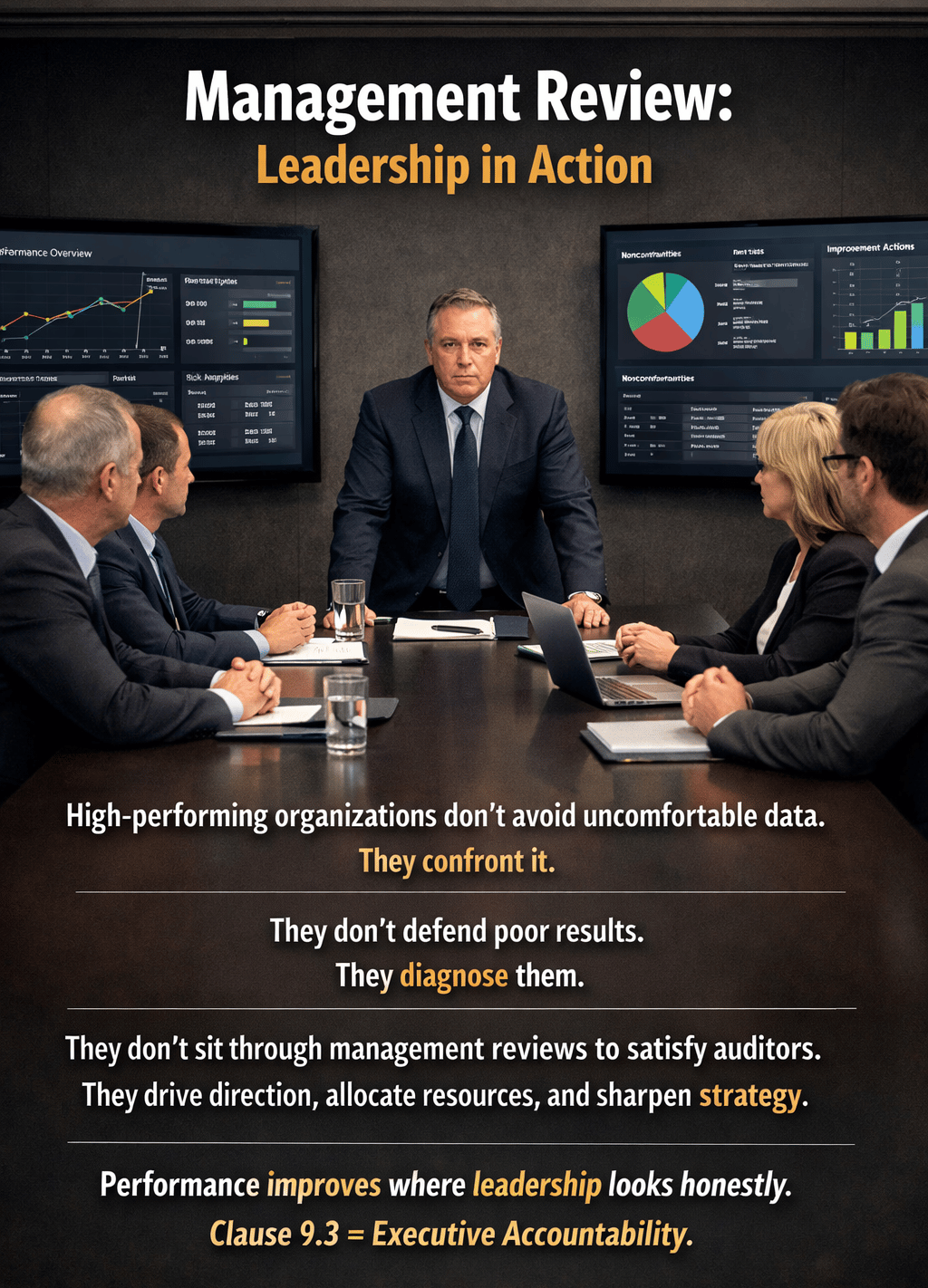
In an era where organizational dynamics are constantly evolving, the significance of management reviews cannot be overstated. Clause 9.3 clearly mandates that top management must review the performance of the management system, and this requirement goes beyond mere compliance; it embodies the essence of effective leadership in action. This structured evaluation is a crucial component that determines the trajectory of an organization’s success.
Key Leadership Responsibilities
Effective leadership requires a proactive approach to oversee and enhance organizational performance. The following leadership responsibilities are essential for conducting an impactful management review:
- Review Objectives: Leaders must regularly assess whether organizational objectives align with the overall mission. This continuous alignment ensures strategic direction and fosters a culture driven by clear priorities.
- Analyse Data: Data analysis forms the backbone of informed decision-making. High-performing organizations embrace discomfort when it comes to scrutinizing raw data. They acknowledge that unflattering metrics must be confronted to foster improvement.
- Evaluate Risks: Identifying and evaluating risks is an integral part of the review process. Leaders need to have a clear understanding of both present and potential challenges, ensuring that risk management strategies are not only established but continuously refined.
- Decide on Improvements: After careful analysis, decisions must be made regarding areas for improvement. This may involve implementing new processes, investing in technology, or enhancing workforce capabilities. The willingness to act on insights gleaned from data sets organizations apart in their pursuit of excellence.
Confronting Uncomfortable Data
A subtle yet profound shift characterizes high-performing organizations: they do not shy away from uncomfortable data; rather, they confront it head-on. This approach fosters a culture of honesty and transparency, where performance is scrutinized, and genuine improvement is pursued. Leadership is pivotal in this process. When leaders are willing to look honestly at the data, organizations position themselves for sustained growth.
Moreover, performance improvements are more likely to occur when leadership is engaged and receptive to criticism. When leaders exemplify a commitment to confronting challenges, it inspires a similar resolve throughout the organization, encouraging all team members to partake in the journey toward improvement.
Conclusion
In conclusion, management reviews are not merely a procedural formality; they represent leadership in action. Embracing the requirements of Clause 9.3 is imperative for organizations aspiring to thrive in today’s competitive landscape. By consistently reviewing objectives, analyzing data, evaluating risks, and making informed decisions for improvement, leaders can drive their organizations toward enhanced performance and sustainable success. In leadership, honesty is not just a virtue; it's a strategic necessity.